

I help what works
continue to work at scale.
continue to work at scale.
BrieAnna Patrick


I did not read Pitch Anything to learn how to sell. I read it to better understand power, attention, and decision-making in high-stakes rooms.What Klaff is really describing is not pitching. It is framing. Who controls the frame controls the outcome.This shows up constantly in my work.
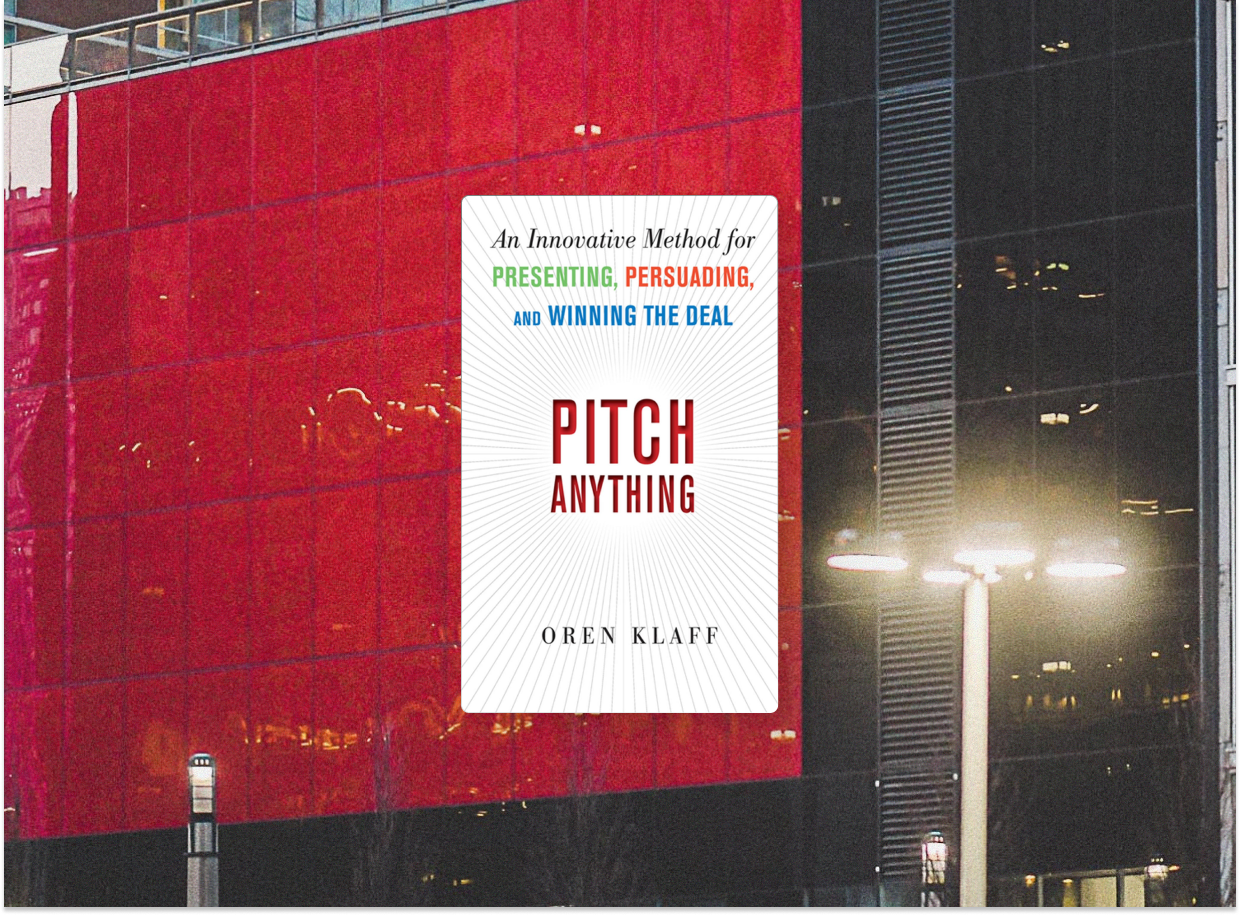
I did not read Pitch Anything to learn how to sell. I read it to sharpen how I think about power, attention, and decision-making.
Most outcomes are not decided at the moment of choice. They are decided upstream, by how the situation is framed and what the mind is asked to process.
Klaff’s language is sales-oriented, but the mechanics underneath apply far beyond pitching. They show up in leadership, systems, and everyday life.
In high-stakes environments, clarity outranks volume. The loudest voice rarely wins. The clearest frame does.
When framing is weak, teams argue about features. When framing is strong, decisions feel obvious. Disagreement collapses because the problem has been properly defined.
This is why I start with structure, not solutions. Once the frame is set, the rest follows.
Everything else is downstream.
Klaff’s idea of the croc brain is a useful shorthand. When people are overwhelmed, they do not decide. They stall, default, or disengage.
This is as true in organizations as it is in individual behavior.
Most systems fail not because they lack capability, but because they demand too much interpretation. Too many options. Too much context switching. Too much ambiguity about what happens next.
The work I respect reduces cognitive load by design. Clear stages. Clear ownership. Clear next actions.
This is not about simplicity for its own sake. It is about momentum.
Features rarely move people. Stakes do.
When the risk is abstract, decisions drift. When the risk is concrete, alignment happens quickly.
This is why effective leaders talk less about what they are building and more about what breaks if they do not act. The human brain responds to consequence before it responds to possibility.
A system that cannot articulate what it protects is unfinished.
Klaff talks about status, but the most durable form of it is quiet. Real authority does not rush. It does not over-explain. It does not perform urgency.
It shows up as structure that holds under pressure.
People trust environments where the rules are clear and the path forward is visible. Calm is not a personality trait. It is an outcome of good framing.
When the frame is right, leadership becomes less about persuasion and more about stewardship.
The most important decisions in business and life are rarely decided in the moment they appear. They are decided by what has been framed as important, risky, or inevitable.
This is why framing is not a tactic. It is a way of thinking.
The job is not to convince.
The job is to shape reality so the right move is the only reasonable one.
That lens applies everywhere. In building systems. In leading people. In deciding what to say yes to and what to walk away from.
This is the perspective I return to. Not as a technique, but as a discipline.
