

I help what works
continue to work at scale.
continue to work at scale.
BrieAnna Patrick


Scaling is often framed as expansion. In practice, it is a stress test. It reveals what was assumed, what was undocumented, and what was quietly held together by individuals rather than systems.
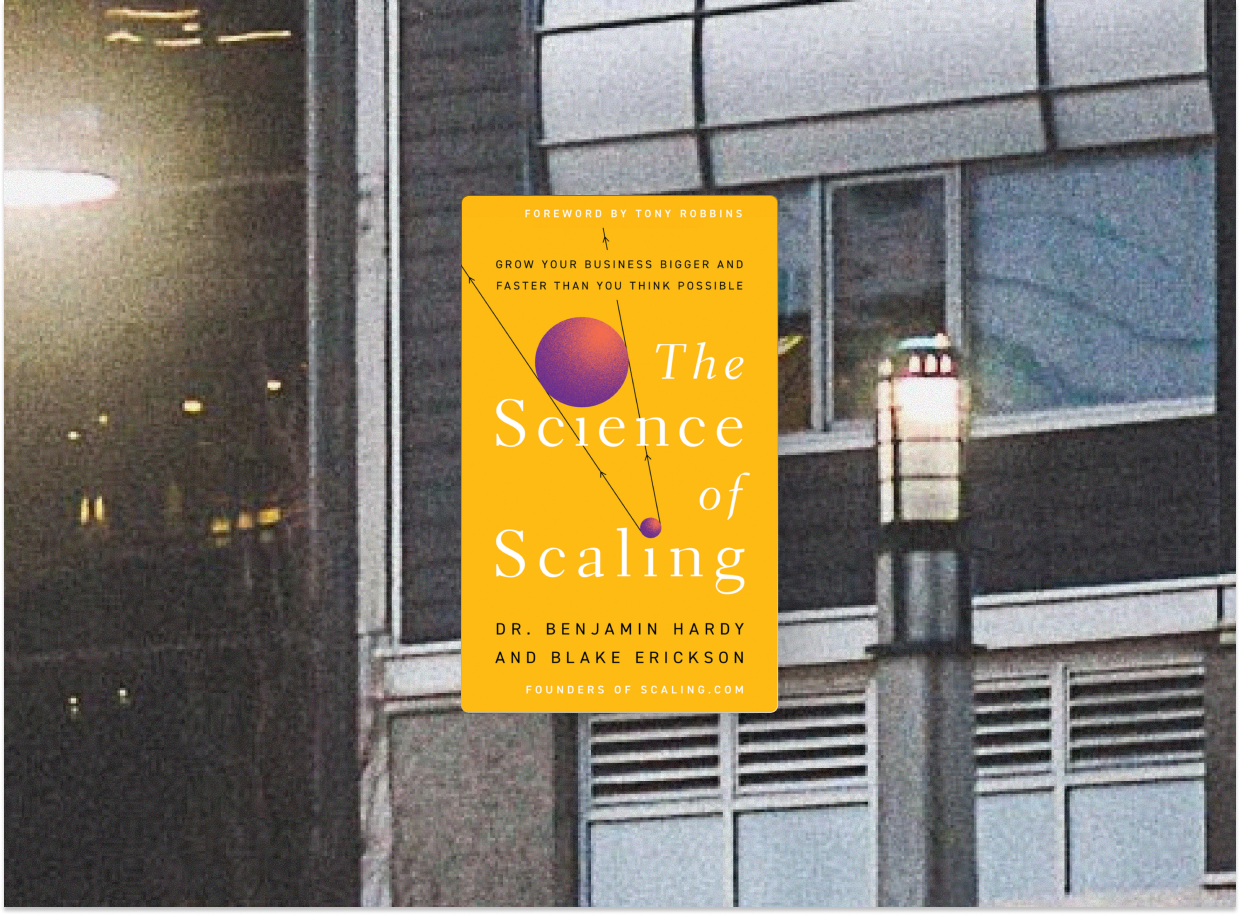
I did not read The Science of Scaling to learn how to grow faster. I read it to better understand why growth breaks so many organizations that appear successful on the surface.
Scaling is often framed as expansion. In practice, it is a stress test. It reveals what was assumed, what was undocumented, and what was quietly held together by individuals rather than systems.
The book treats scaling as an engineering problem, not a motivational one. That framing matters.
Scaling does not introduce new problems. It amplifies existing ones.
When volume increases, ambiguity compounds. Decisions slow. Ownership blurs. What once felt flexible starts to feel fragile.
This is why early success can be misleading. A small team can survive on intuition and goodwill. A growing organization cannot.
Scaling asks a simple question. Can this system make good decisions repeatedly without relying on heroics.
If the answer is no, growth becomes the liability.
The book makes a useful distinction between necessary complexity and accidental complexity.
Necessary complexity comes from the problem space. Accidental complexity comes from poor decisions made under time pressure.
Most organizations confuse the two.
They attribute friction to scale when it is actually the result of unclear interfaces between teams, undefined decision rights, or systems that were never designed to talk to each other.
Good scaling work removes accidental complexity first. Only then does growth become manageable.
Scaling narratives often glorify speed. The science tells a different story.
Velocity without stability increases error rates, rework, and burnout. It creates the illusion of progress while quietly degrading the system underneath.
Sustainable scale depends on repeatability. Not just of outputs, but of decision-making itself.
If a system cannot produce the same quality outcome twice without special effort, it is not ready to scale.
One of the strongest ideas in the book is that leaders do not scale work. They scale the conditions under which work happens.
That means designing interfaces, incentives, and feedback loops that hold up under pressure.
When leaders stay too close to execution, they become the bottleneck. When they step back without structure, chaos fills the gap.
The work is in between.
Teams trust systems that behave predictably. Customers trust organizations that deliver consistently.
Stability is not rigidity. It is reliability.
Scaling done well feels calm. Scaling done poorly feels frantic.
Scaling is often treated as something you do after success. In reality, it is a way of thinking you adopt early.
Systems that scale well are designed with future pressure in mind, even when volume is low.
This applies beyond organizations. It applies to personal commitments, leadership roles, and life choices that compound over time.
The science of scaling reinforces a principle I return to often.
What you allow repeatedly becomes the system you live with.
Growth does not change that. It only makes it visible.
