I help what works
continue to work at scale.
continue to work at scale.
BrieAnna Patrick



.png)
The moment immediately after purchase is where customer trust is either reinforced or quietly eroded. Responsibility shifts from sales to fulfillment—and without a clear system of record, even strong teams are forced to improvise.
At ASN, this transition spanned 21 independent organizations, each operating with different tools, teams, and incentives, all funneling members into a single fulfillment operation. Without a shared definition of readiness, ownership, or urgency, onboarding outcomes depended more on individual effort than on system design.
This project focused on stabilizing that moment—turning onboarding from a fragile handoff into a deliberate, repeatable product experience.
Problem
Before this system, fulfillment began informally—through calls, emails, and tribal knowledge. There was no shared definition of when work officially entered fulfillment or what “ready” meant. Every downstream decision inherited that ambiguity.
Mechanism
Structured intake that defines when work enters fulfillment and what “ready” means.
Product Expression
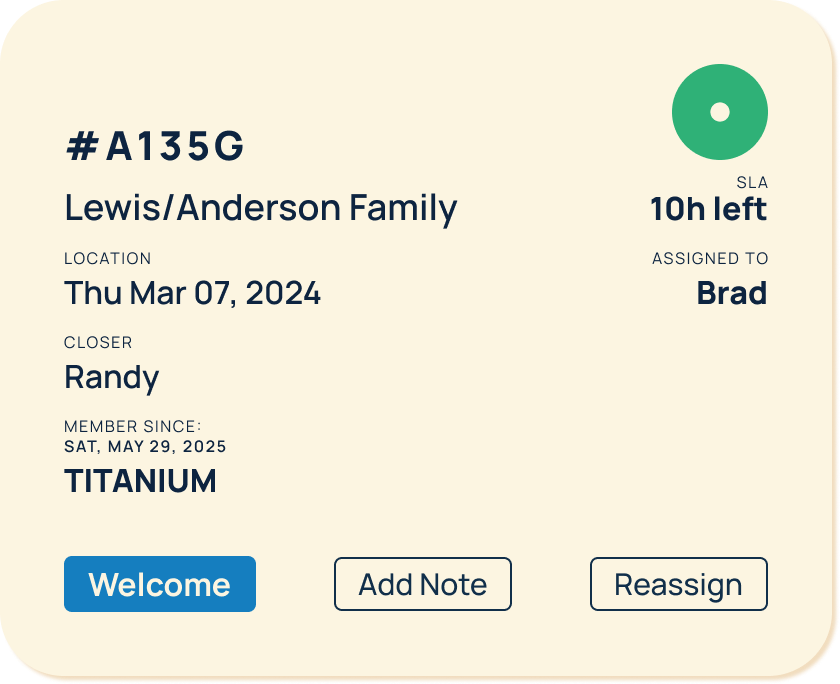

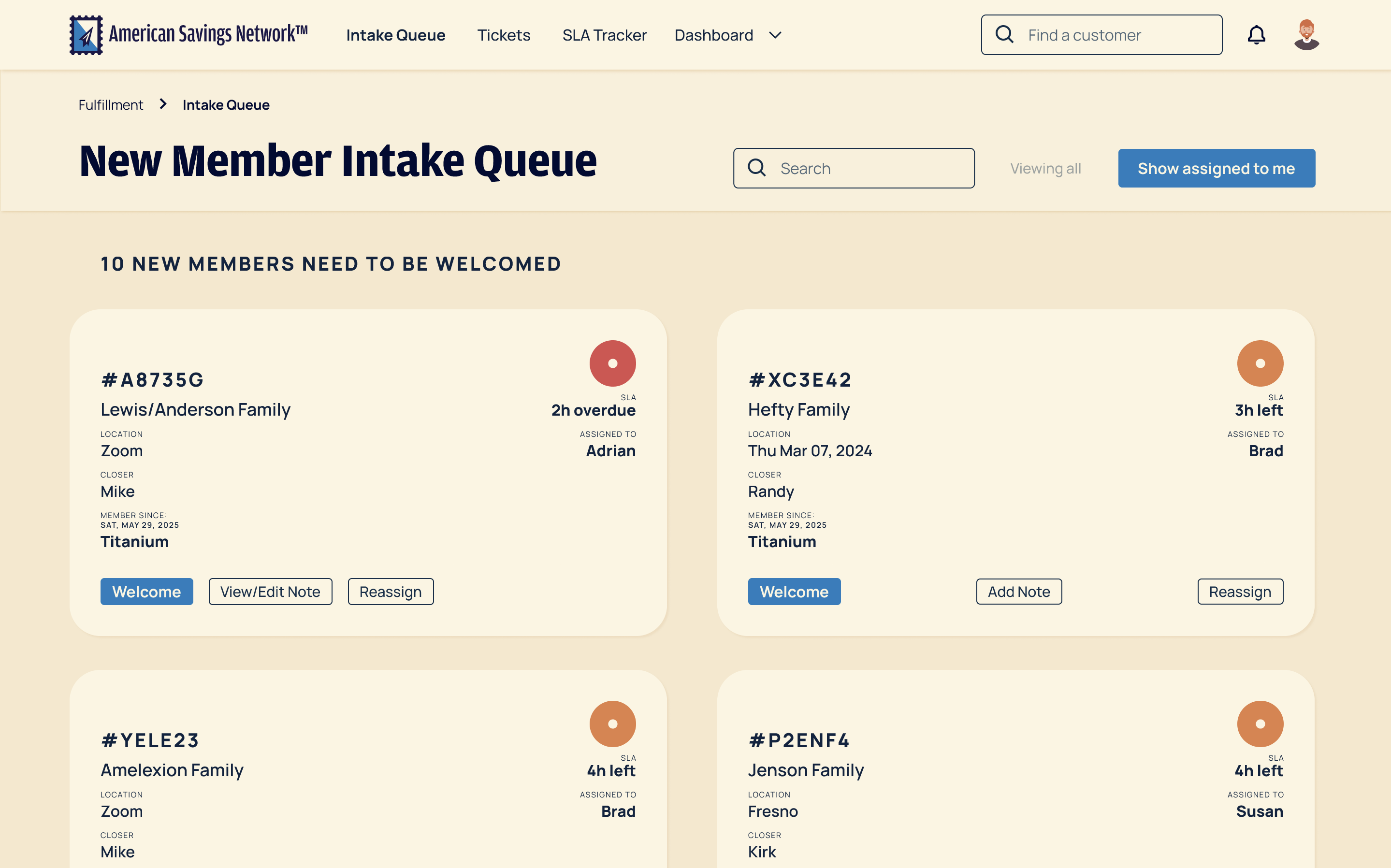
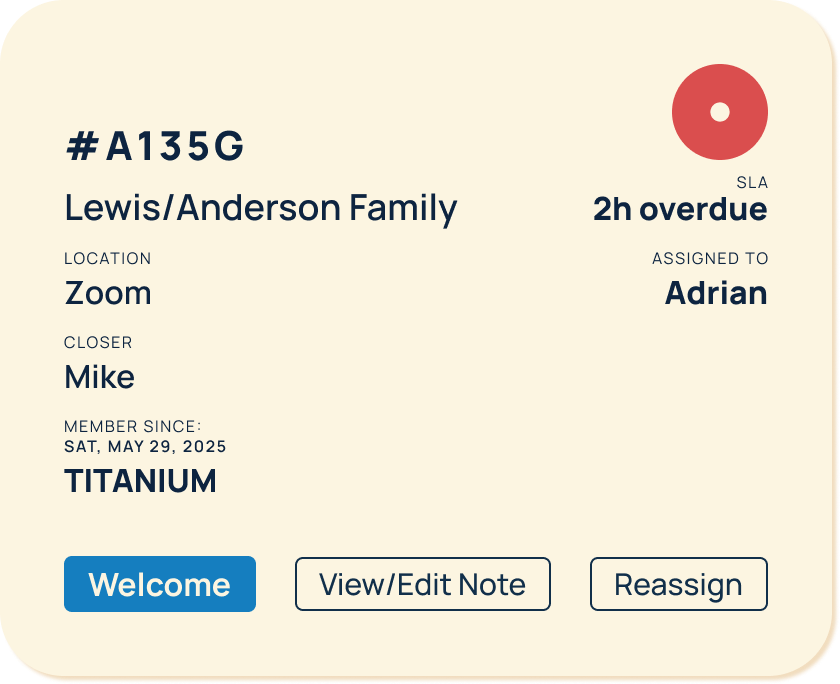
Once work entered fulfillment, the system made urgency and accountability impossible to ignore. Ownership, status, and time-bound expectations were surfaced directly in the queue—removing the need for manual tracking or follow-ups.
This shifted fulfillment from reactive work to managed flow, allowing teams to prioritize confidently and intervene before issues escalated.
Product Expression
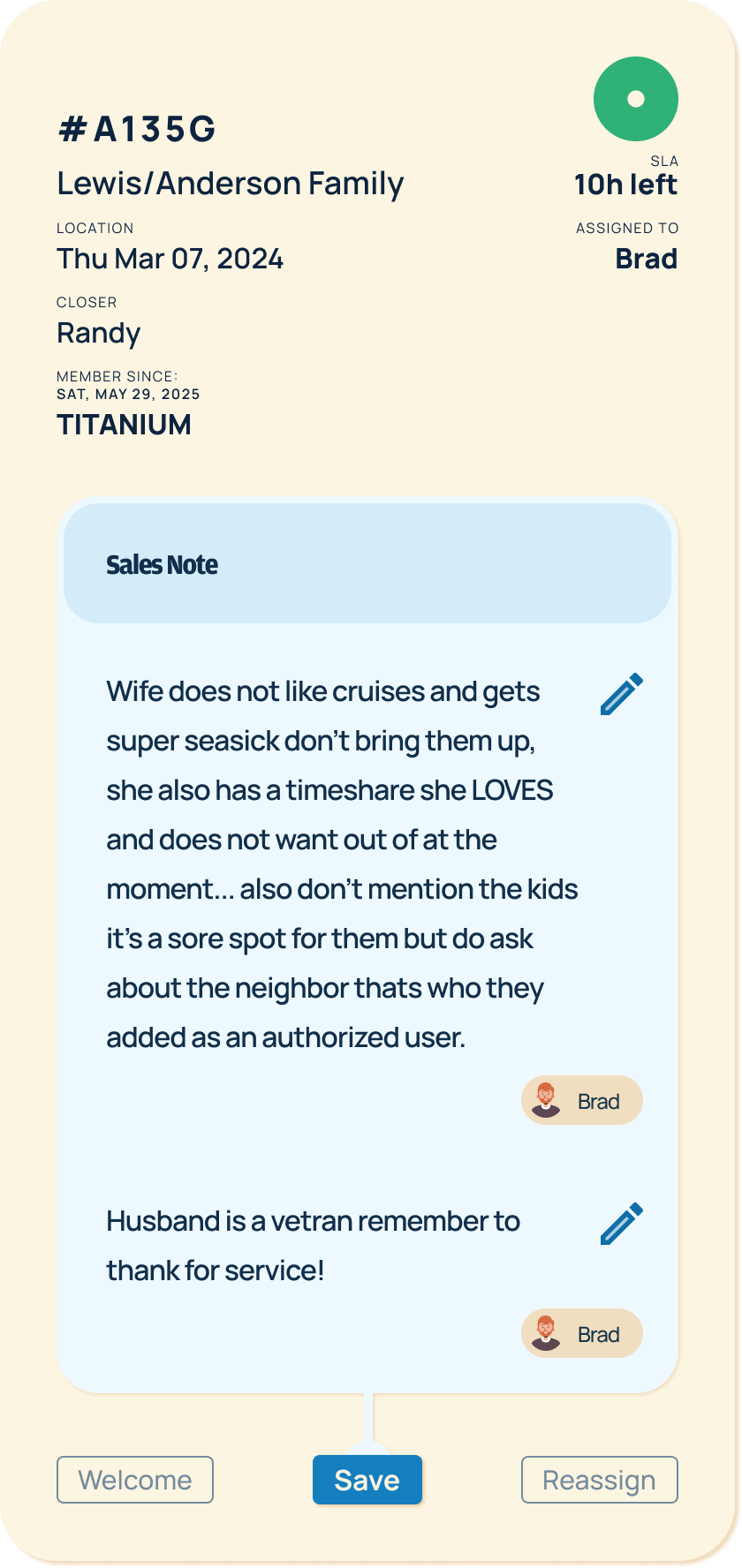
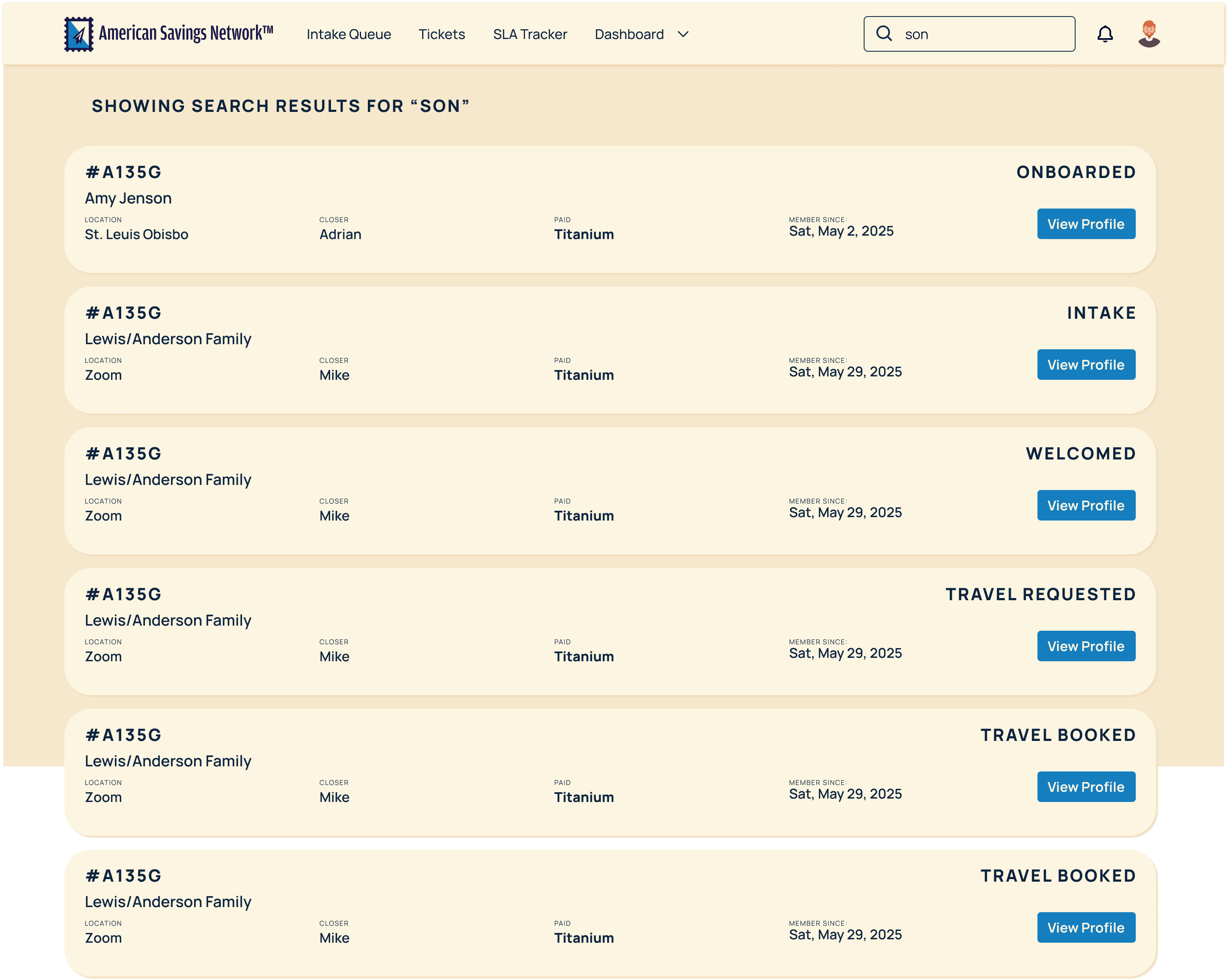
The first fulfillment interaction sets the emotional tone for the entire membership. When context is lost, customers feel like they are starting over—even after a successful sale.
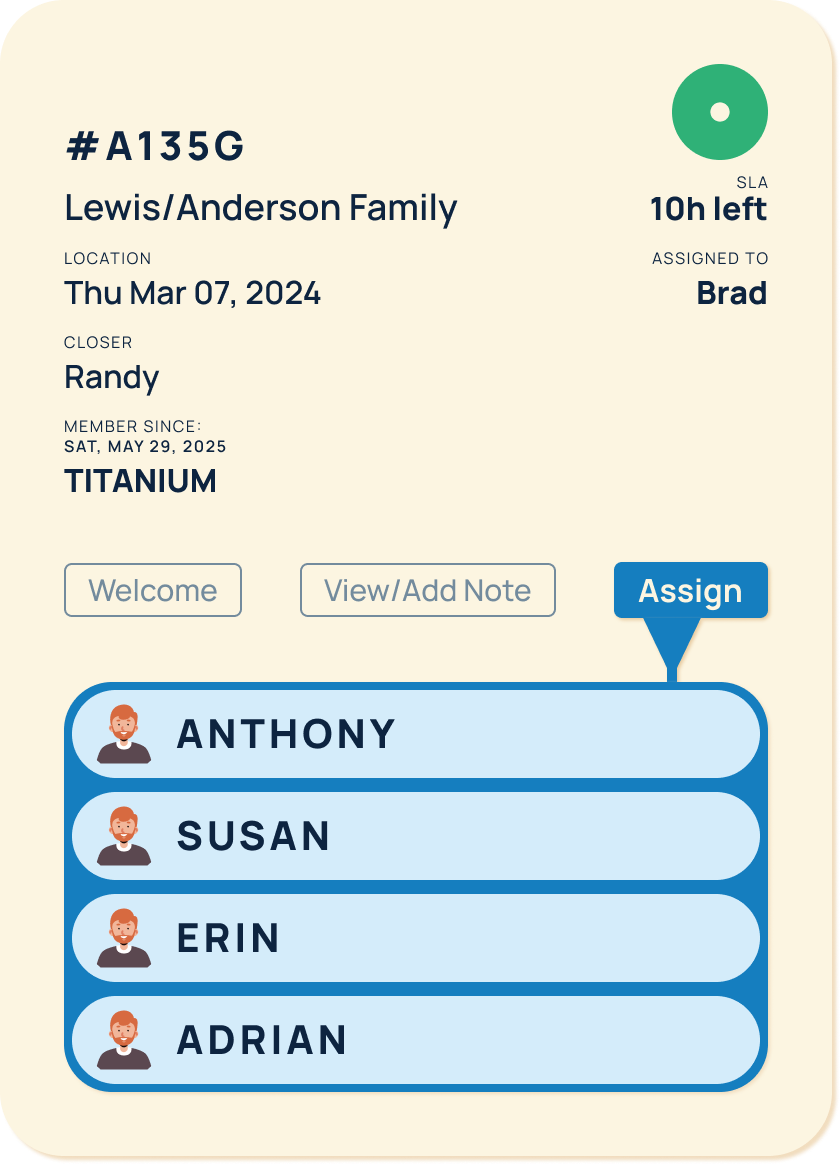
This system ensured that relationship context traveled with the member, not the individual. Sales insights, preferences, and sensitivities were embedded directly into the fulfillment workflow so agents could begin with awareness instead of discovery.
The result was a first touch that felt intentional, informed, and human—without relying on memory, side conversations, or backchannels.
Product Expression